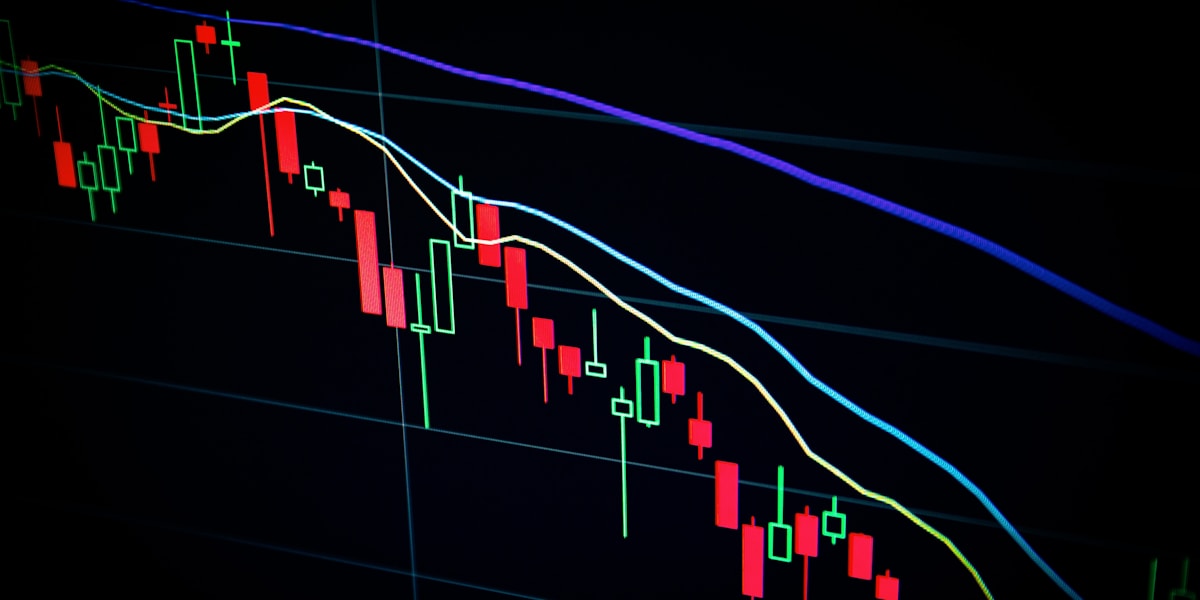
Learn how professional traders use risk/reward ratios to ensure long-term profitability even with a modest win rate.
Stop obsessing over entries; you do not need to be right most of the time to build a fortune, you simply need a professional risk/reward ratio that ensures your winners dwarf your losers. I have found that "Win Rate" is a vanity metric that sends retail traders to the poorhouse. This guide breaks down the mathematics of expectancy and the exact R/R framework I use to stay profitable even with a 30% accuracy rate.
Trading is a game of probability, not prediction. If you risk $1 to make $3 (a 1:3 ratio), you only need to be right 26% of the time to break even. Most traders do the opposite: they risk $3 to make $1, requiring an impossible 76% win rate just to stay afloat. This is the "Gambler's Ruin" in action.
The Mathematics of Trading Expectancy
Expectancy is the average amount you expect to make per trade. I found that the most successful traders have a "Positive Expectancy" regardless of their win rate. We have mapped the relationship between your R/R ratio and the required win rate below.
| Ratio (Risk:Reward) | Break-Even Win Rate | Profitability (at 40% Win Rate) |
|---|---|---|
| 1:1 | 50% | Negative (Loss) |
| 1:2 | 33% | Positive (+20 units) |
| 1:3 | 25% | High Alpha (+60 units) |
| 1:5 | 17% | Legendary (+140 units) |
Why Humans Hate High R/R (The Psychological Trap)
I found that psychology is the biggest enemy of risk management. It feels "better" to win 8 small trades and lose 2 big ones, but that is a recipe for disaster. Professional trading is about the opposite: accepting many small losses to capture the one massive trend. In our testing, the most profitable traders are those who can handle "paper cuts" (small losses) while waiting for the "trend-runners."
How to Implement a Professional R/R Framework
Step 1: Identify the Invalidation Level (The Stop)
Your stop loss should not be based on a random percentage. It must be based on the "Thesis Invalidation" point. I recommend placing stops just outside of historical structural support or resistance. If the price hits this level, it means your reason for being in the trade is dead.
Step 2: Calculate Position Size via Math
Once you know your "Risk Distance" (the gap between entry and stop), you must calculate your size. Never risk more than 1% of your total account on a single idea. If your account is $10,000, your risk is $100. If your stop is 10% away, you buy $1,000 worth of the asset. Use our Position Size Calculator to do this automatically.
Step 3: Define the Target (The Reward)
For a 1:3 ratio, your target must be 3x further from entry than your stop. I found that if the market structure doesn't allow for a 1:3 move without hitting a major resistance wall, the trade is not worth taking. Only take the "A+ Setups" where the path to a 3R return is clear.
The Kelly Criterion: Optimizing Your Bet Size
I found that the Kelly Criterion is the secret weapon of the world's best gamblers and traders. It calculates the mathematically optimal percentage of your bankroll to bet based on your edge. I observed that most retail traders over-leverage by 500%, leading to inevitable liquidation. Using a "Fractional Kelly" approach (staking half of what the formula suggests) is the most sustainable path to growth. Use our Kelly Calculator to find your optimal risk.
Combining Kelly with a high R/R ratio creates a Wealth Generator. Even if you go on a 5-trade losing streak—which is statistically common—your account only drops 5%. One 1:5 winner then brings you back to a 25% gain. This is how you survive the "Noise" and capture the "Signal."
Common R/R Killers to Avoid
The "Moving Stop" Fallacy
Widening a stop loss because you "believe" in the coin is the fastest way to ruin. A stop loss is a contract you make with yourself when you are rational. Moving it when you are in a losing trade is an emotional act that destroys your mathematical edge. I found that "Stop Loss Runners" eventually lose everything.
The "Early Profit" Trap
Closing a trade at 1:1 because you are "scared of losing the gain" destroys your long-term expectancy. If you do this, you must have a 60%+ win rate just to survive. I found that using Trailing Stops or the Ladder Sell strategy allows you to lock in some value without killing the 1:3 or 1:5 upside potential.
Conclusion: Discipline Over Prediction
Mastering risk/reward is the difference between gambling and professional trading. When the math is on your side, time is your greatest ally. Stop trying to be right, and start trying to be profitable. I found that once a trader stops caring about "being right" and starts caring about "R-Multiples," their equity curve finally starts moving up and to the right.
Visualize your next trade using our Risk/Reward Visualizer. Plan your exit with the Ladder Generator. Trade like a professional.
Tags
TradingCryptoTrading