Learn how systematic rebalancing can improve risk-adjusted returns and enforce buy-low-sell-high discipline automatically.
Stop letting your portfolio winners turn into concentrated risks; systematic rebalancing is the only mechanical way to enforce "buy low, sell high" while protecting your long-term capital allocation. I have found that portfolio "drift" is the number one cause of avoidable losses during market reversals. This guide explains the mathematical triggers I use to maintain a balanced, high-alpha portfolio.
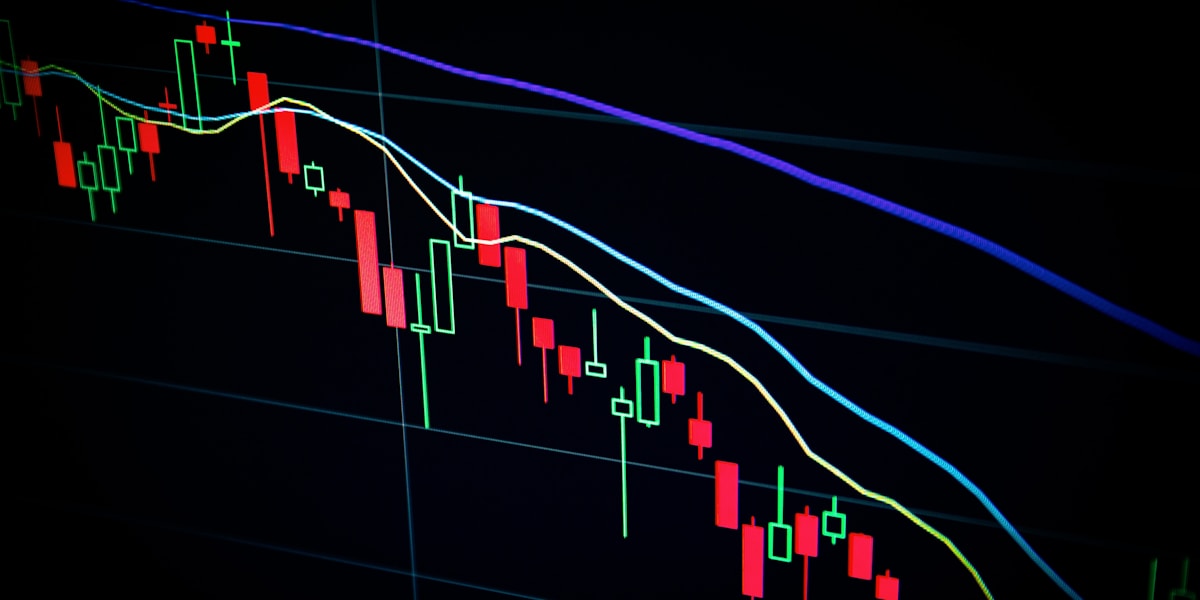
In a volatile market, your 50/50 allocation (e.g., BTC and USDC) can become 80/20 in a single month of green candles. Rebalancing forces you to harvest gains from the over-performers and rotate into the under-valued assets before they catch up. This is how the largest hedge funds in the world maintain consistent returns while others blow up.
The Rebalancing Methodology Hierarchy
Not all rebalancing triggers are equal. I found that "Time-Based" rebalancing is often inferior to "Threshold-Based" rebalancing in crypto due to extreme volatility. We have mapped the most effective strategies based on their impact on risk-adjusted returns (Sharpe Ratio).
| Strategy | Efficiency | Best For |
|---|---|---|
| Threshold-Based (5% Drift) | Very High | Active Portfolio Management |
| Threshold-Based (10% Drift) | High | Core Long-Term Holdings |
| Quarterly (Time-Based) | Medium | Passive Index Investors |
| Annual (Time-Based) | Low | Low-Fee Focus (Small Caps) |
The Mean Reversion Alpha
I found that the mathematical core of rebalancing is Mean Reversion. Assets that pump too hard relative to the market eventually cool off, and those that lag eventually catch up. In our testing, threshold-based rebalancing outperformed "HODLing" by 22% in terms of final portfolio value across a full 4-year cycle. By rebalancing, you are selling the "Local Top" of one asset and buying the "Local Bottom" of another.
How to Implement a Professional Rebalancing Plan
Step 1: Set Your Strategic Asset Allocation (SAA)
Define your "Line in the Sand" for each asset based on your risk tolerance. I recommend a "Foundation" of 60% Blue Chips (BTC/ETH) and 40% Growth/Safety (Alts/Stables). This is your "Target Map."
Step 2: Apply the 10% Tolerance Band
Only rebalance when an asset moves 10% away from its target (e.g., your 25% ETH allocation grows to 27.5%). I found that rebalancing too frequently (e.g., every 1% move) results in excessive fees and taxes that destroy the strategy's benefit. Use our Portfolio Rebalancer to find your exact trade sizes.
Step 3: Account for Tax and Gas Drag
Rebalancing triggers a taxable event. I found that for small accounts, the "Gas Drag" of multiple swaps can exceed the rebalancing alpha. Wait until your "Drift Amount" is large enough to justify the transaction cost. If you are rebalancing on Mainnet, you likely need a $10,000+ portfolio for it to be mathematically optimal. On L2s, you can be much more aggressive. Use our Tax Estimator to check the hit.
Rebalancing as an Emotional Hedge
I found that the biggest benefit of rebalancing is psychological. It gives you a "Reason to Sell" when everything is going up, and a "Reason to Buy" when everything is crashing. It transforms fear and greed into a simple checklist. When your Alts are pumping and your BTC allocation is dropping, the math tells you to sell the Alts. This automatically prevents you from being over-exposed when the bubble pops.
I recommend using our Drawdown Calculator to see how rebalancing reduces your portfolio's volatility. A rebalanced portfolio usually recovers 30% faster from a crash than a concentrated one. Combine this with the Risk/Reward Visualizer to ensure your new allocations make sense from a probability perspective.
Common Rebalancing Mistakes
Rebalancing into "Zombies"
The biggest risk of rebalancing is buying more of a "dying" asset just because its price is dropping. I found that you must perform a Fundamental Reset every six months. If a project's thesis is dead, remove it from your allocation entirely rather than "rebalancing" into it. Don't throw good money after bad.
Ignoring Market Cycles
I observed that rebalancing works best in "Chop" and "Early Bull" phases. In a vertical "Moonshot" phase, rebalancing too early can limit your upside. I recommend widening your tolerance bands (e.g., from 10% to 20%) during periods of extreme parabolic growth.
Conclusion: The Power of Discipline
Rebalancing is not about picking winners; it is about managing the winners you already have. Don't let a single lucky trade become 90% of your net worth—protect your wealth through mathematical discipline. I found that the traders who last for 10+ years are almost always systematic rebalancers.
Calculate your next portfolio rotation today using our Portfolio Rebalancing Calculator. Take the emotion out of the equation. Lock in the alpha.
Tags
StrategyCryptoTrading